
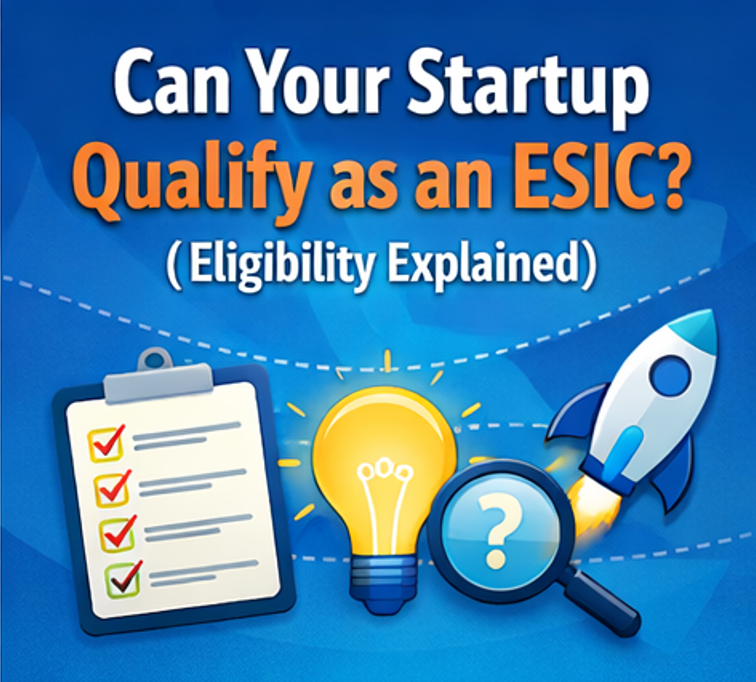
Can your startup qualify as an ESIC? (Eligibility explained)
If you are planning to use ESIC as part of your fundraising strategy, your company must qualify at the time investors buy shares. If you raise capital in stages, eligibility must be reassessed each time.
To qualify as an ESIC, your company must meet two separate requirements:
- The early stage test, and
- The innovation test (either the 100-point test or the principles-based test)
You must pass both.
Step 1: The early stage test
Your company must meet all of the following:
- Your company must be incorporated or registered on the Australian Business Register within the last 3 income years; or incorporated within the last 6 income years, must have incurred total expense of $1m or less and across the last 3 income years
- Your company’s (plus any wholly owned subsidiaries) expenses did not exceed $1m in the previous income year
- Your company’s (plus any wholly owned subsidiaries) assessable income did not exceed $200,000 in the previous income year, and
- Your company’s equity interest is not listed in the official list of any stock exchange in Australia or abroad.
If you fail any of these, you cannot qualify as an ESIC.
Step 2: The innovation test
If you pass the early stage test, you must then pass one of the following:
Option A: 100-point innovation test
You must score at least 100 points from objective criteria such as:
- R&D Tax Incentive registration
- Participation in eligible accelerator programs
- Holding enforceable intellectual property rights
- Receiving certain government grants or third-party investment
This test is assessed immediately after the shares are issued.
Option B: Principles-based innovation test
If you do not meet the 100-point threshold, you may still qualify if you can demonstrate that your company:
- Is genuinely focused on developing new or significantly improved innovations for commercialisation
- Has high growth potential
- Can successfully scale
- Can address markets beyond a local market
- Can develop a sustainable competitive advantage
This test is more subjective and usually requires strong evidence and professional advice.
Important risks to manage
Founders should be aware that:
- ESIC status is not permanent and must be tested at each funding round
- Investors can lose tax benefits if ESIC is incorrectly applied
- Promoting ESIC eligibility without proper assessment can create legal and reputational risk
For this reason, many startups seek:
- Formal ESIC advice, and/or
- An ATO private ruling before marketing themselves as ESIC-eligible.
What next?
Even if your company qualifies as an ESIC, investors will only receive the tax incentives if the investment itself is structured correctly. Some common funding structures do not qualify.
👉 Next: What types of investments qualify for ESIC incentives?
Contact Wayne on wayne@arealcfo.com.au or 0412 227 052.
Click on the below buttons to access other free Resources developed by Wayne Wanders, A Real CFO to help your business scale and grow profitably
Want a confidential discussion on your business situation, help with your grant application or to learn more about my Outsourced CFO Services, simply email me at wayne@aRealCFO.com.au or call me on 0412 227 052
