
Scaling Isn’t the Problem. Alignment Is.
The One Page Strategic Plan Explained
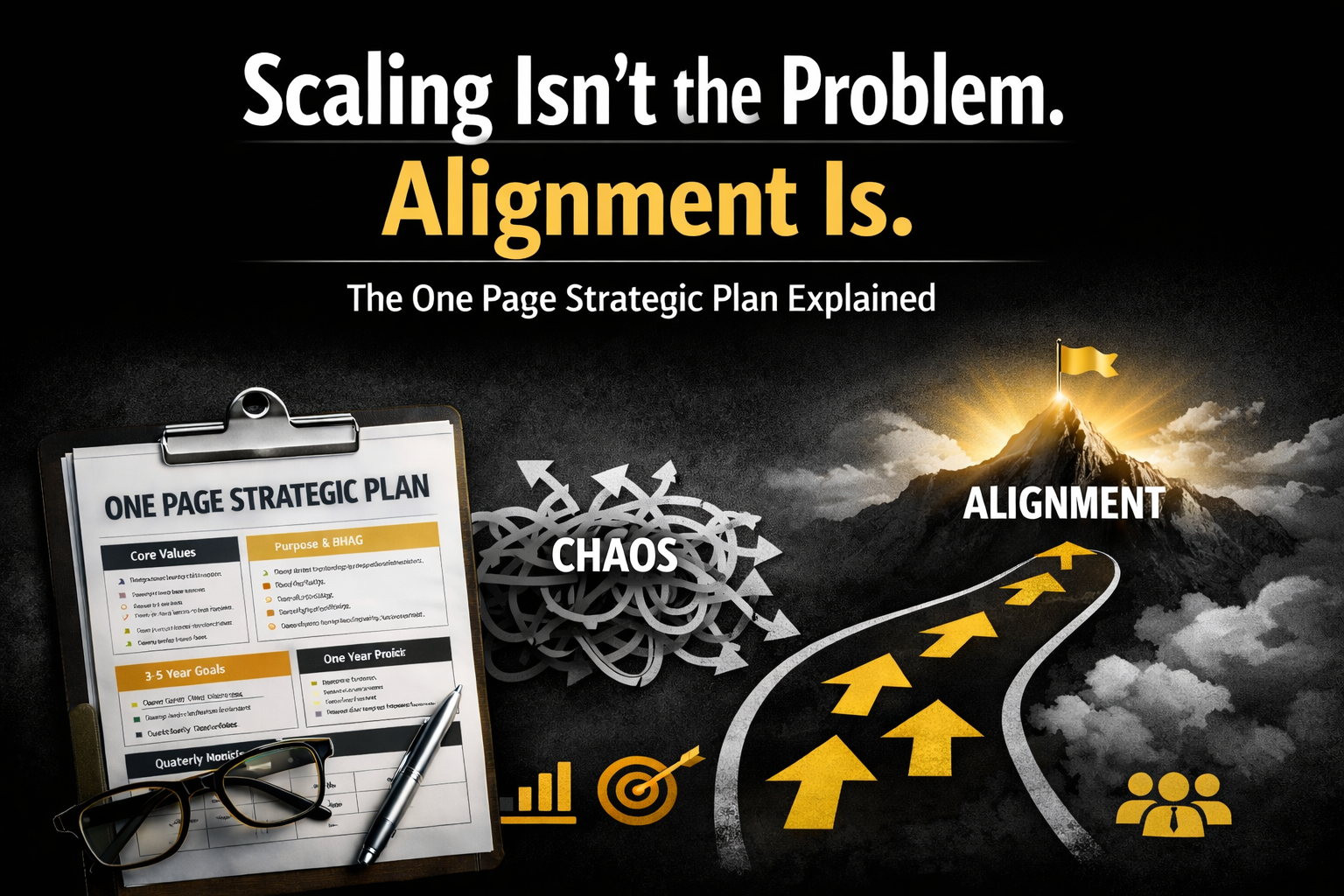
This article is designed to show you how the One Page Strategic Plan can help keep everyone aligned, focused on the right priorities, and ultimately give your business a far better chance of growing profitably.
Why Alignment Matters More Than Effort
A while ago, I had the pleasure of sitting in a room listening to Dr Glen Richards, founder of Greencross and Shark Tank investor. For a couple of hours, he shared his insights into what truly underpins sustainable business success.
One message stood out clearly:
“If the foundations of a business are not clearly defined and communicated, people will naturally pull in different directions.”
And when that happens, even good people working hard can end up cancelling each other out.

That’s exactly where the One Page Strategic Plan (OPSP) becomes so powerful.
It’s a practical framework designed to help leadership teams align around what truly matters — and stay aligned as the business grows.
Typically, it fits on one A3 page or two A4 pages, simple, visible, and easy to return to regularly.
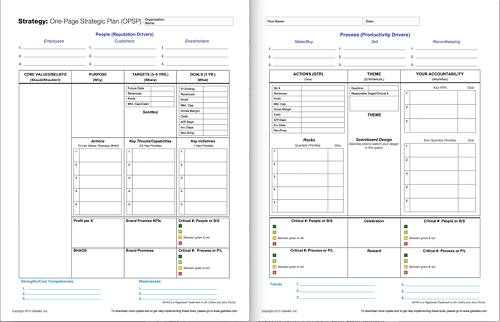
The Seven Questions the Plan Answers
At its core, the One Page Strategic Plan answers seven simple but powerful questions:
Who, What, When, Where, How, Why, and the Should / Should Nots.
Each section builds clarity, focus, and accountability across the organisation.
Column 1: Core Values – The Rules of the Game (The “Should / Should Nots”)
The first column defines your core values. These are the non-negotiables that shape:
- How people behave
- How decisions are made
- The personality and culture of the business
They act as a “should / should not” filter for everything you do.
Core values often start with statements like:
- We continually improve how we operate
- We are fiercely committed to our clients’ success
- We do what we say we will do
These values guide decisions around:
- Hiring and firing
- Suppliers and partners
- Customers you choose to work with
For example:
- If you’re interviewing two candidates with similar experience, choose the one who best aligns with your values.
- If a customer or supplier consistently conflicts with your values, it’s worth questioning why you’re working with them at all.
Column 2: Purpose and the Big Why
Column two focuses on purpose, your why.
This is about the impact your business exists to make. Why does what you do genuinely matter?
This section also includes your Big Hairy Audacious Goal (BHAG), a long-term, inspiring target that gives your team something meaningful to strive toward.
This is not about being realistic.
It’s about being compelling.
Column 3: 3–5 Year Targets and the Sandbox
This column defines where the business is heading over the next three to five years.
It includes:
- Aspirational and aggressive financial targets
- Clear direction on who your ideal customers are
- Where you choose to play (your “sandbox”)
- What you truly sell
It also captures major strategic priorities such as:
- Launching a new product or service
- Entering new markets
- Acquiring another business
This is also where you define your Brand Promise, what customers can consistently expect from you and what genuinely differentiates you from competitors.
Many businesses also define their Profitability by X here, the key lever that drives sustainable profitability (for example, profit per customer, per project, or per product).
Column 4: One-Year Priorities
Now we bring the strategy closer to home.
This section defines what must be achieved in the next 12 months to move you toward your 3–5 year goals.
Here you identify:
- The key initiatives for the year
- The critical number, the one metric that, if achieved, makes everything else easier
Examples might include:
- X new customers
- $Y profit per customer
- Z% improvement in cash flow
This keeps focus on what really matters, rather than trying to improve everything at once.
Column 5: Quarterly Rocks
Now we zoom in even further.
This section defines what must happen in the next 90 days.
These priorities are called “Rocks”, the few critical initiatives that move the business forward right now.
The idea is simple:
Focus on the big rocks first, before the sand and pebbles of day-to-day activity take over.
Each rock must have a clear owner.
If someone is working on something that isn’t a rock, it’s worth asking why.
Column 6: The Theme
The theme is a simple, and often fun, way to keep everyone focused on the quarterly priorities.
It helps:
- Drive engagement
- Reinforce the critical number
- Create energy and momentum
Think of it as a rallying cry for the quarter that keeps people aligned and motivated.
Column 7: Accountability
This is where accountability lives.
Quarterly goals and actions are assigned to individuals or teams, creating clarity around ownership.
For small business owners with little or no team, this often mirrors Column 5, but it still plays a critical role in maintaining focus, discipline, and follow-through.
Trends, Strengths and Weaknesses (SWT)
Along the bottom of the One Page Strategic Plan is a section focused on Trends, Strengths, and Weaknesses.
This differs from a traditional SWOT analysis.
- Trends: shifts in technology, markets, customer behaviour, regulation, or society that may impact your business
- Strengths / Core competencies: what your business consistently does well
- Weaknesses: inherent limitations that are unlikely to change
This section encourages leaders to think beyond today and anticipate what’s coming next.
A Living, Breathing Document
The One Page Strategic Plan is not static.
At the end of each quarter:
- You review what was achieved
- You reset priorities
- You adjust where needed
Many businesses also use a regular rhythm of:
- Weekly check-ins
- Quarterly planning sessions
- Annual strategy reviews
This rhythm ensures the plan remains relevant and actionable.
A Few Final Tips
When completing your One Page Strategic Plan:
- There isn’t much space, so be concise
- Start with what you know, you don’t need to complete everything at once
- Progress always beats perfection
Final Thoughts
The One Page Strategic Plan isn’t about creating a perfect document.
It’s about:
- Creating clarity
- Aligning your team
- Improving decision-making
- And building a business that scales profitably
If you’d like help creating or refining your One Page Strategic Plan, feel free to reach out to me at:
Wayne@aRealCFO.com.au
Contact Wayne on wayne@arealcfo.com.au or 0412 227 052.
Click on the below buttons to access other free Resources developed by Wayne Wanders, A Real CFO to help your business scale and grow profitably
Want a confidential discussion on your business situation, help with your grant application or to learn more about my Outsourced CFO Services, simply email me at wayne@aRealCFO.com.au or call me on 0412 227 052
